
2025 in Review

Once more round the sun we go, and arrive once again at the time of year when recaps and recommendations are flung around as so much water.
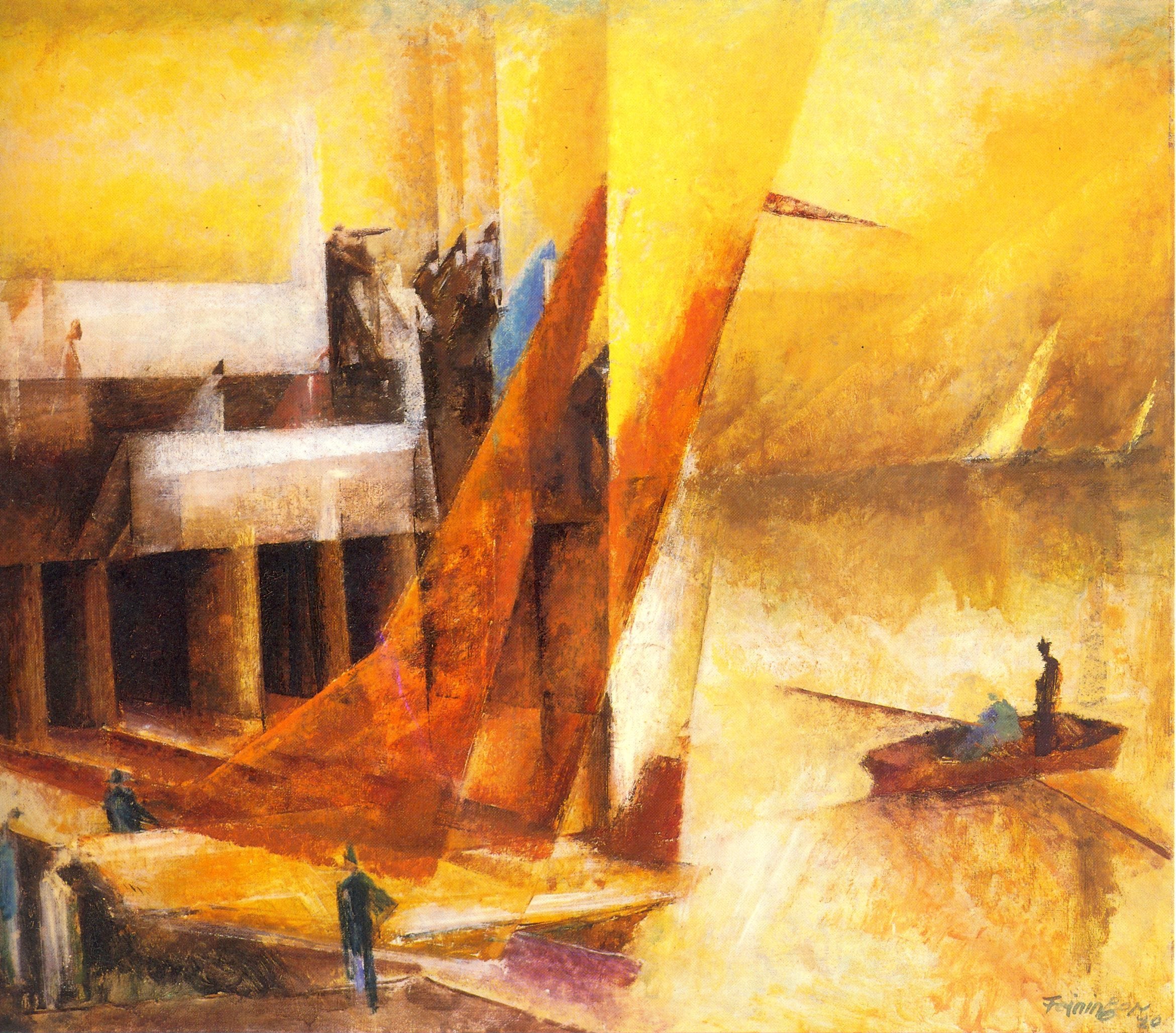
In an early passage of his Leaves from the Notebook of a Tamed Cynic the theologian and Reformed minister Reinhold Niebuhr describes how ridiculous it feels to preach as a young man to those who have drank more deeply from the well of experience and sorrow.
There is something ludicrous about a callow young fool like myself standing up to preach a sermon to these good folks. I talk wisely about life and know little about life’s problems. I tell them of the need of sacrifice, although most of them could tell me something about what that really means. I preached a sermon the other day on “The Involuntary Cross,” using the text of Simon the Cyrene bearing the cross of Jesus. A good woman, a little bolder than the rest, asked me in going out whether I had borne many crosses. I think I know a little more about that than I would be willing to confess to her or to the congregation, but her question was justified.
It should be obvious to most of you that blogging and preaching are somewhat different activities, and to boot I am somewhat older than 23. Moreover one shouldn’t overstate the importance of what one does here; still, there are times when I feel that I understand what Niebuhr was saying. All of which is a sort of preliminary deflation of the collection of links to posts from last year of which I am proud.
The most significant accomplishment on this blog in 2025 was my blogging-through, in ten parts, one of literary modernism’s great “beached whales,” Ezra Pound’s Cantos.
Throughout this project and the weekly or biweekly posts which surround it, one can observe a certain working-out of theories of America and how Americans sometimes go awry. “kulchur-envy” deserves its own post at some point, so here’s a fragment about Don DeLillo and American culture that’s been floating around drafts for a while:
There is a passage or passages somewhere in the center of Don DeLillo’s Underworld that I often think of in which one of the middle aged characters who speaks with DeLillo’s voice ponders the bomb. The threat of nuclear annihilation, he posits, has been the centrifugal force organizing life in the United States since the Manhattan project. At the peak of the end of history, this man of DeLillo’s generation wonders what will become of us now that that spector has faded? Will America drift apart and dissolve? One finds something like this sentiment in many accounts of the malaise that settled over the country following the end of the Cold War.
This was a less productive year for reviewing than I would’ve liked, but I am fond of this study of what I think will turn out to be one of the great books of our moment. So much of this review was spent interrogating the influence of Morrison and Moore that quite a bit was left on the cutting room floor.1
Much of my late spring and summer was spent on a reevaluation of the primary sources of Marxism. I still wouldn’t call myself a Marxist, and to be honest I’m not even sure about “leftist,” but it was nonetheless an important exercise, and I hope we got at least a few good posts out of it.
A post that found an audience despite my assumption that it would be incredibly niche was an April writeup of Harry Neumann’s singular book, the essay collection Liberalism. Neumann is from what I can tell largely not considered a major figure by those who did not study with him directly (there were no pdfs, and no copies in circulation, I had to pay to borrow the book from a university library) but I found Liberalism a fascinating and illuminating read which will certainly receive more attention if I ever start that book on the Straussians some of you are trying to get me to write.
I finally finished the From Hell review essay, and got around to writing probably the only Bloomsday post I’ll ever write, one which lays out my problems with Ulysses and the ways in which it has to be dealt with in (I hope) one place. I also started and did not finish a blogging through of Only Revolutions, which hopefully will be completed in the new year.
Eternal Gnocci Recommendations:
John Pistelli’s Grand Hotel Abyss
Henry Begler’s A Good Hard Stare, which had evolved from
Naomi Kanakia’s Woman of Letters
Paul Franz’s Ashes and Sparks (and if you can, his interintellect seminars are not to be missed either)
Julianne Werlin’s Life in Letters
Cameron Steele’s Interruptions
Mary Jane Eyre’s The Extremely Difficult Realization
John Ganz’s Unpopular Front
Joshua Tait’s To Live is to Maneuver
Daniel Oppenheimer’s Eminent Americans
At Midnight, All the Agents...
New (to me)
John Encaustum’s Blackthorn Hedge
Virginia Weaver’s Overlong Memories
Avery James’s The Truman Show, from which I am still awaiting a Teddy Roosevelt essay.
Fr. Christopher Poore’s Drawn from the Chalice
Ben Crosby’s Draw Near with Faith
Lillian Wang Selonick’s The Lillian Review of Books
Thanks for reading! Happy 2026!
Somehow, despite this being the ostensible topic of the review, it seems that I underemphasized the extent to which the book is ambivalent toward the style of late 20th century pop culture to which Moore and Morrison belong. The book comes at times quite close to endorsing Sontag’s famous defense of elitism from “Fascinating Fascism”
Art that seemed eminently worth defending ten years ago, as a minority or adversary taste, no longer seems defensible today, because the ethical and cultural issues it raises have become serious, even dangerous, in a way they were not then. The hard truth is that what may be acceptable in elite culture may not be acceptable in masa culture, that tastes which pose only innocuous ethical issues as the property of a minority become corrupting when they become more established. Taste is context, and the context has changed.
On the other hand I perhaps undersold how much the book is willing to validate the allure of counterculture. It seems significant that the twin moral centers of Pistelli’s previous novel Class of 2000 are a proto-tradcath upper middle class schoolgirl and a lesbian cyber-goth.
Happy New Year, Gnocchi! Happy to read you and to be read by you!!
"It seems significant that the twin moral centers of Pistelli’s previous novel Class of 2000 are a proto-tradcath upper middle class schoolgirl and a lesbian cyber-goth."
Key to all mythologies right there. Thanks for your review, excited to see what arises here in 2026, and happy New Year!